
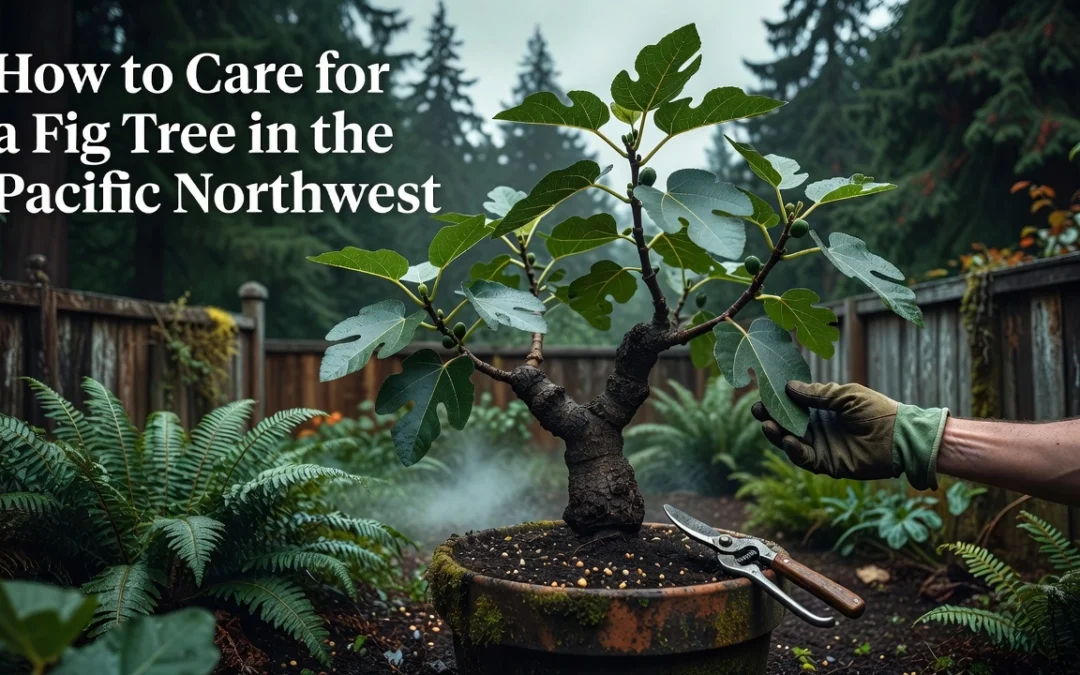
If you have ever bitten into a perfectly ripe fig straight from the tree, you already know why so many Pacific Northwest gardeners are willing to put in the effort to grow one. Sweet, jammy, and nothing like the dried versions from the grocery store, fresh figs are genuinely worth the work. But here is the thing: growing figs in our cool, rainy region comes with its own unique set of challenges, and without the right knowledge, it is easy to struggle.
The good news is that fig tree care does not have to be complicated, even if you are a complete beginner. With the right approach to planting, watering, pruning, and winter protection, you can absolutely grow a thriving fig tree in the Pacific Northwest. In this guide, we are going to walk you through everything you need to know, from choosing the best variety for our climate to keeping your tree healthy year after year. By the end, you will feel confident and ready to get your hands dirty. Let’s dig in!
Why Fig Trees Are a Unique Challenge in Kitsap County
If you’ve ever tried to grow figs in the Pacific Northwest, you already know they don’t exactly thrive on autopilot. Ficus carica is officially considered “marginal” for our region, and that label matters. The cool, maritime climate slows down fruit development that would happen quickly in California or the Southwest. Kitsap County’s position right off Puget Sound adds another layer of complexity, with its own rainfall patterns and frost timing that can differ from inland areas or even the Portland metro where a lot of PNW fig advice originates.
Here’s the thing that trips up most beginners: fig trees can actually produce two separate crops. The first is the breba crop, which grows on last year’s wood and ripens in midsummer. The second is the main crop, which forms on new growth and needs a longer, warmer season. According to growers who have trialed fig varieties across the Pacific Northwest, the main crop often doesn’t ripen before autumn chill shuts the season down. In Kitsap, that’s a real concern every single year. This is exactly why variety selection and pruning decisions aren’t minor details; they’re the difference between a productive tree and a frustrating one.
The good news is that regional interest is growing fast. Programs like the NW Fruit Garden are actively trialing over 200 fruit cultivars, including figs specifically suited to cool maritime conditions. Nurseries dedicated to Pacific Northwest fruit growing have tested varieties over multiple seasons to identify what actually performs here. Kitsap-area gardeners are seeking out this kind of locally grounded guidance more than ever, and understanding these regional factors upfront will shape every care decision you make, from planting day to your first winter pruning.
Choosing the Right Fig Variety for the Pacific Northwest
Variety selection is genuinely the most important decision you’ll make with a fig tree, and it’s worth getting right before you put anything in the ground.
‘Desert King’ is the go-to cultivar for Pacific Northwest growers, and for good reason. It matures to around 10 feet tall, which keeps it manageable for most residential yards, and it produces a strong breba crop that doesn’t require a long, hot summer to ripen. That’s the key trait for Kitsap County. The breba crop forms on prior-year wood and ripens in late summer without needing the heat accumulation that California varieties depend on. Burnt Ridge Nursery in Washington state describes Desert King as thriving in the PNW and delivering large crops of excellent quality fruit, which matches what regional growers consistently report.
‘Negronne’ is a solid second option with a well-documented track record in the region. Its breba figs typically ripen over roughly two weeks in late July through early August, which fits neatly inside Kitsap’s compressed warm season. That’s a realistic, usable harvest window rather than an optimistic estimate.
The general principle here: prioritize varieties with a reliable breba crop and don’t count on the main crop coming in before fall chill shuts things down. This is exactly where national or California-focused growing guides lead beginners astray. Those guides assume heat units and frost dates that simply don’t apply to maritime Pacific Northwest conditions. According to fig grower research, Desert King’s breba crop is actually considered inferior in California, which explains why it gets overlooked in guides written for that climate. Here, that “inferior” breba crop is your primary harvest.
When in doubt, talk to someone local. A certified arborist or nursery staff familiar with Kitsap County conditions can save you years of frustration from a variety that quietly underperforms before you figure out why.
Planting Your Fig Tree: Site Selection and Setup
Once you’ve settled on your variety, where you put that tree matters just as much as which one you pick. Figs are sun-hungry and cold-sensitive, and in Kitsap County’s cooler microclimates, placement can be the difference between a productive tree and one that just barely survives each winter.
Start by identifying the warmest, most sheltered spot on your property. A south or southwest-facing wall is ideal because masonry and wood siding absorb heat during the day and release it at night, effectively extending your growing season by a few critical weeks. This is a well-documented strategy for growing figs in the Northwest, and it’s especially worth doing in Kitsap where summer heat is inconsistent.
Soil drainage is your next priority. Figs tolerate a wide range of soil types, but they do not tolerate soggy roots, and heavy clay soils common in parts of Kitsap County hold moisture through our long, wet winters. If you’re dealing with clay, consider building a raised bed or mound before planting. Sandy, well-drained soil warms faster in spring, which gives your tree a head start on the growing season.
Think ahead about canopy height, too. Planting with future pruning access in mind is a genuine strategy, not an afterthought. Keeping your fig at a manageable, reachable height directly affects how much fruit you’ll get each season. More on that in the pruning section.
If your site has limitations or you want maximum flexibility, container growing is worth considering. Pacific Northwest growers in Zone 8b actively use containers to move trees into a garage or shed during severe cold snaps. This protects the prior-year wood where breba fruit buds form, meaning a cold snap that damages unprotected wood can cost you your entire first crop of the season.
Finally, give your tree room. Fig roots spread aggressively, so keep your tree away from foundations, utility lines, and neighboring plants. Full sun access matters at maturity, and you want clearance for both the root system and the canopy long before the tree gets there. A little planning at planting time saves a lot of difficult decisions later, including potentially costly ones involving removal or rerouting.
Pruning Fig Trees in the PNW: When, Why, and How
Pruning is where fig tree care gets both practical and unforgiving, and getting the timing right in Kitsap County makes a real difference in how much fruit you actually harvest.
Prune During Dormancy, Before Bud Break
The correct window for significant pruning is late winter, while your tree is still dormant and before it begins budding out. In Kitsap County, this typically falls somewhere in February or early March, but watch the tree rather than the calendar. One useful thing to understand: cutting dormant wood signals the tree to regrow proportionally to what was removed. Prune aggressively, and the tree responds with aggressive, productive new growth. That’s a tool you can use deliberately to keep the canopy manageable year after year.
Once your fig starts pushing new buds, put the pruning saw away. Heavy pruning at that stage removes the developing breba figs that are already beginning to form on last year’s wood, cutting off your current season’s fruit before it even gets started. The recovery benefit you get from dormant pruning simply isn’t there once active growth begins.
The One Rule PNW Growers Can’t Ignore
Every winter, the growing tips of your fig tree need to be within arm’s reach. That’s not a suggestion; it’s the defining pruning principle for PNW growers. Next season’s figs form on those tips. Let the canopy climb beyond reach height and you’ve put your fruit crop out of range, and the problem gets harder to correct each year you let it slide. Growing Figs in the Northwest from Cloud Mountain Farm Center covers this two-phase pruning approach well and is worth reading alongside this guide.
What to Cut and What to Leave
When you’re pruning, focus on removing dead wood, branches that cross and rub against each other, and any growth pointing inward toward the center of the tree. The goal is an open canopy that lets light reach every branch. In the PNW, your fig needs every hour of sun it can get during the growing season, and a dense, congested canopy works directly against that.
Autumn Cleanup Matters Too
Before winter sets in, take a walk around your tree and snap off any obviously dead, half-grown figs still clinging to the branches. These are fruit that stalled out when temperatures dropped in autumn and never ripened. Left in place through the rainy PNW winter, they rot and carry that decay directly back into the twig, creating entry points for disease in wood you need to stay healthy. It takes five minutes and saves real trouble later.
A Seasonal Fig Tree Care Calendar for Kitsap County
Think of this as your at-a-glance reference for what to do with your fig tree and when. Kitsap County’s maritime climate has its own rhythm, and matching your care tasks to that rhythm is what separates a productive tree from a frustrating one.
Winter (December through February)
This is your most important window for fig tree care. While the tree is fully dormant, walk the whole structure and assess what you’re working with. Reduce overall height so the growing tips stay within reach, because that’s exactly where next season’s breba figs will form. Remove any dead or damaged wood, and get this done before bud swell begins in late February or early March. Think structural and conservative; heavy removal of healthy wood redirects the tree’s energy into regrowth instead of fruit.
Spring (March through April)
Once you see buds starting to swell, put the pruning tools away. Those tiny swellings at the tips of last year’s shoots are your future breba figs, and cutting them off at this stage means losing your most reliable harvest. Spring is also the time to apply a balanced fertilizer as new growth kicks in, and to scout the canopy carefully for overwintering pests before the season builds momentum.
Summer (June through August)
For varieties like ‘Negronne,’ watch for breba ripening during the roughly two-week window in late July through early August. Kitsap summers can be surprisingly dry, and drought stress during this period directly affects fruit size and flavor quality, so keep irrigation consistent when rainfall drops off.
Autumn (September through November)
Harvest any main-crop figs that have ripened before the first frost. Just as important: remove any dead, half-grown figs still hanging on the branches. Left in place through autumn rain, they rot and carry decay back into the twig. Begin tapering irrigation as the tree heads toward dormancy, and take a mental note of any structural issues to address in the coming winter pruning session.
Year-Round Monitoring
The Pacific Northwest’s warm, humid shoulder seasons create real pressure from fungal issues, so keep an eye on the canopy throughout the year. Early detection makes management much more straightforward than dealing with an established problem. The Skagit County Master Gardeners’ fig growing guide is a solid regional reference if you want to go deeper on variety-specific pest and disease considerations relevant to maritime climates like Kitsap’s.
Watering and Fertilizing Your Fig Tree
Fig trees have a well-deserved reputation for toughness, but that doesn’t mean they thrive on neglect. Getting water and fertilizer right is one of the more nuanced parts of fig tree care, especially in Kitsap County where the climate creates some counterintuitive challenges.
The July and August irrigation window matters more than most people expect. Yes, Kitsap gets plenty of rain overall, but our driest stretch typically falls right when figs are sizing up and ripening. During July and August, you’ll likely need to supplement with irrigation, aiming for roughly one to two inches of water per week. A slow, deep watering two to three times a week is better than frequent shallow watering, which encourages surface roots that dry out quickly.
Here’s the thing most new fig growers get backwards: overwatering is a bigger risk than drought for PNW figs. During our long, cool, wet winters and springs, waterlogged roots in heavy clay soils are one of the most common reasons residential figs struggle or decline. If your yard has drainage issues, consider a raised planting bed or a well-amended site to keep roots from sitting in saturated soil for months at a time.
For fertilizing, apply a balanced slow-release fertilizer like a 10-10-10 formulation right at bud break in early spring. This gives your tree the nitrogen boost it needs for new shoot growth and fruit bud development. Skip the late-summer fertilizing; pushing tender new growth in August or September leaves it wide open to damage from early autumn frosts. The Fig Tree Growers Network documents this exact spring sequence, applying slow-release fertilizer at bud break, followed by bark mulch and a thorough watering.
Container-grown figs need more attention on both fronts. Their restricted root systems mean nutrients and moisture are depleted faster. Check soil moisture every couple of days during summer and fertilize every three to four weeks with a diluted balanced fertilizer, always watering the soil thoroughly before feeding to avoid root burn. For a deeper look at container feeding practices, this guide to fertilizing fig trees covers nutrient ratios and timing in useful detail.
Finally, mulch the base of your tree every spring with two to four inches of arborist chips or bark mulch. It conserves moisture during dry summer months and moderates soil temperature through wet winters. Just keep the mulch pulled back a few inches from the trunk itself, since persistent dampness against the bark invites rot, which is a real concern in our climate.
Common Fig Tree Pests and Diseases in the Pacific Northwest
Even well-cared-for fig trees run into trouble occasionally, and knowing what to watch for in the Pacific Northwest can save you a lot of frustration before problems get out of hand.
Fig rust (Cerotelium fici) is one of the more common fungal issues you’ll encounter in our humid late-summer and early-fall conditions. It shows up as yellow-orange spots on the upper leaf surface, with powdery brown spores visible on the undersides. Heavy infections can defoliate a tree quickly, which weakens it heading into winter. The best first line of defense is improving airflow through the canopy. Your annual dormant pruning isn’t just about fruit production; it’s also your most practical tool for keeping fungal pressure down without reaching for a spray bottle.
Souring is a different kind of problem. It’s caused by a combination of yeast, bacteria, and vinegar flies that move in when figs crack or sit on the tree too long. The fix is simple: harvest promptly as figs ripen, and remove any fallen or rotting fruit from around the base of the tree. Don’t let damaged fruit linger.
If your property backs up to wooded areas in Kitsap County, gopher damage is worth taking seriously. Established trees can handle moderate root disturbance, but young trees are vulnerable. Planting inside a wire basket is a straightforward protective measure worth considering at planting time.
During dry stretches in summer, keep an eye out for scale insects and spider mites. Flip leaves over and check along stems regularly. Catching an infestation early, before it spreads across the canopy, makes a real difference in how easy it is to manage. The Fig Tree Growers Network has active discussions where growers share what’s working for mite control if you want real-world input.
Honestly, consistent sanitation handles the majority of pest and disease pressure without any chemical intervention at all. Remove dead figs in autumn, clear leaf litter, and keep up with your annual pruning. Those three habits alone go a long way.
What to Do When a Hard Freeze Damages Your Fig Tree
Kitsap County’s maritime climate keeps most winters manageable for established fig trees, but every few years an Arctic outflow event pushes temperatures low enough to cause serious damage. Sustained cold below roughly 10 to 15°F is the threshold where fig wood begins dying back significantly, and in a bad freeze, the entire above-ground structure can die back to the root crown. The good news is that the root crown almost always survives, which means your tree is not necessarily gone, just set back.
Resist the urge to grab your pruners right away. After a hard freeze, the single most important thing you can do is wait. Hold off until late winter or early spring, when the tree would normally begin breaking dormancy. At that point, the difference between dead wood and live wood becomes much clearer, and you avoid cutting away branches that might still have viable growth in them.
When you’re ready to assess, use the scratch test. Run your fingernail along a stem and scratch through the outer bark. Green or white tissue underneath means that branch is still alive. Brown, dry, or mushy tissue means it’s dead and needs to come out, either back to a point where you find healthy wood or all the way to the ground if the whole stem is gone.
If your tree died back completely to the root crown, don’t write it off. New shoots will typically push up from the base in spring. Select the one to three strongest-looking shoots to become your new leaders, and remove the rest so the tree puts its energy where you want it.
For severe cases involving multiple major limbs or total canopy loss, this is exactly the situation where a certified arborist earns their keep. The team at Lefler Tree Service and professionals like them can accurately assess whether recovery is realistic, what structural risks exist, and whether a safe removal or full renovation is the smarter path forward. Getting that assessment early saves time, money, and a lot of second-guessing.
Growing Fig Trees in Containers to Beat Kitsap Winters
If you’re growing a cold-sensitive variety or just want maximum peace of mind during Kitsap’s occasional hard freezes, container growing is one of the smartest strategies available to you. A potted fig tree can be wheeled into an unheated garage, shed, or basement when temperatures drop, protecting both the wood and those dormant fruit buds that will become next year’s breba crop. It’s a practical workaround that lets you grow varieties you’d otherwise lose.
Start with the right container. Use at least a 15 to 20-gallon pot with drainage holes, and don’t undersize it thinking you’ll upgrade later. Fig roots are aggressive, and a cramped pot will stress your tree fast once the growing season kicks in. A soil-less or well-draining potting mix is a better choice than heavy garden soil, which compacts in containers and creates drainage problems. One practical tip worth mentioning: get a wheeled pot dolly before you need it. Moving a large containerized fig tree is genuinely hard work, and a dolly saves both the effort and your back.
During winter storage, less is more. Dormant figs need almost no light and very little water. Your goal is to keep the tree cold enough to stay dormant, generally above freezing but below around 50 degrees Fahrenheit. Check the soil occasionally and water just enough to prevent the root ball from drying out completely. If your storage space warms up and buds start breaking early, the tree will need far more light than any indoor space can provide.
Bring the container back outside in mid-to-late March, once the risk of hard frost has passed in Kitsap County. Resume normal watering and begin fertilizing as you see new growth pushing. Avoid the temptation to rush this transition; a gradual move outdoors lets the tree adjust naturally.
Every two to three years, do a root pruning and repot during dormancy. Trim circling or compacted roots, refresh the growing medium, and inspect for rot or pest damage while you’re in there. It keeps the tree healthy, productive, and manageable for the long term.
When Fig Tree Care Becomes a Job for a Professional Arborist
Most fig tree care falls well within what a motivated home gardener can handle. But there are specific situations where calling a certified arborist is genuinely the safer and smarter move.
Crown reduction on a large fig is one of those situations. If your tree has grown well beyond reach height and needs significant canopy work, this is not a job for a ladder and a pruning saw. A certified arborist understands which cuts reduce the canopy size without stripping the productive older wood that carries next season’s fruit buds. Done wrong, aggressive crown reduction can set your tree back by years of fruit production or leave it structurally vulnerable.
Storm damage deserves a professional eye before you touch anything. Broken limbs, split crotches, and trees that have shifted or leaned after a wind event can be unpredictable once you start cutting. The risk escalates considerably if your fig is anywhere near a structure, fence, or utility line. A professional assessment tells you what is safe to address yourself and what needs trained hands and proper equipment.
Disease and pest problems that haven’t responded to basic care are worth a professional diagnosis. An experienced arborist can tell the difference between a treatable infection, cosmetic damage that looks alarming but isn’t, and genuine irreversible decline. Getting that read correctly saves you from either over-treating or giving up on a tree that had a good prognosis.
Severe freeze dieback is the fourth scenario where a professional opinion pays off. After a hard freeze, it can be genuinely difficult to know whether your fig needs removal, hard renovation pruning, or simply more time. A premature removal is a loss; leaving a structurally dead tree in place is a hazard.
Lefler Tree Service has been working with Kitsap County homeowners since 1988. Whether the job is a precision pruning to keep your fig productive, storm damage cleanup, or full removal, our team can assess your specific situation and give you a straightforward recommendation without unnecessary upselling.
Growing a Great Fig Tree in Kitsap County Is Very Doable
Growing a great fig tree in Kitsap County comes down to three things done consistently: choose a breba-focused variety like Desert King or Negronne, prune every winter while the tree is dormant to keep those fruiting tips within reach, and follow a care calendar that actually reflects how our maritime seasons behave. Get those three things right, and you’re most of the way there.
The good news is that most fig tree problems in the PNW are genuinely preventable. The annual dormant pruning window and autumn cleanup of unripened dead fruit are your two highest-impact habits. Skip them repeatedly, and you’ll spend years wondering why your tree looks fine but never produces. Stay consistent, and the tree rewards you.
That said, some situations call for a professional. Crown reduction on an overgrown tree, storm damage assessment, or sorting out recovery after a hard freeze are jobs with real structural stakes. If your fig tree situation has moved past comfortable DIY territory, reach out to Lefler Tree Service for a consultation. Their team has been helping Kitsap County homeowners manage trees of all kinds since 1988.
Here’s the closing perspective worth holding onto: figs have been cultivated by humans for over 11,000 years, predating wheat and barley as a domesticated crop. The Kitsap climate is a challenge, not a dealbreaker. People have grown figs in far less forgiving conditions than ours. With the right variety and a little seasonal attention, you can too.
Conclusion
Growing a fig tree in the Pacific Northwest is absolutely within your reach. By choosing a cold-hardy variety suited to our climate, planting in the warmest and most sheltered spot available, staying consistent with watering and pruning, and taking winter protection seriously, you set yourself up for years of sweet, homegrown harvests.
Yes, our cool and rainy region presents some challenges. But thousands of Pacific Northwest gardeners are already growing beautiful, productive fig trees in their backyards, and there is no reason you cannot join them.
Now it is time to stop reading and start doing. Visit your local nursery, pick out a variety that excites you, and get it in the ground. Your future self, standing in the garden with a sun-warmed fig in hand, will be very glad you did.