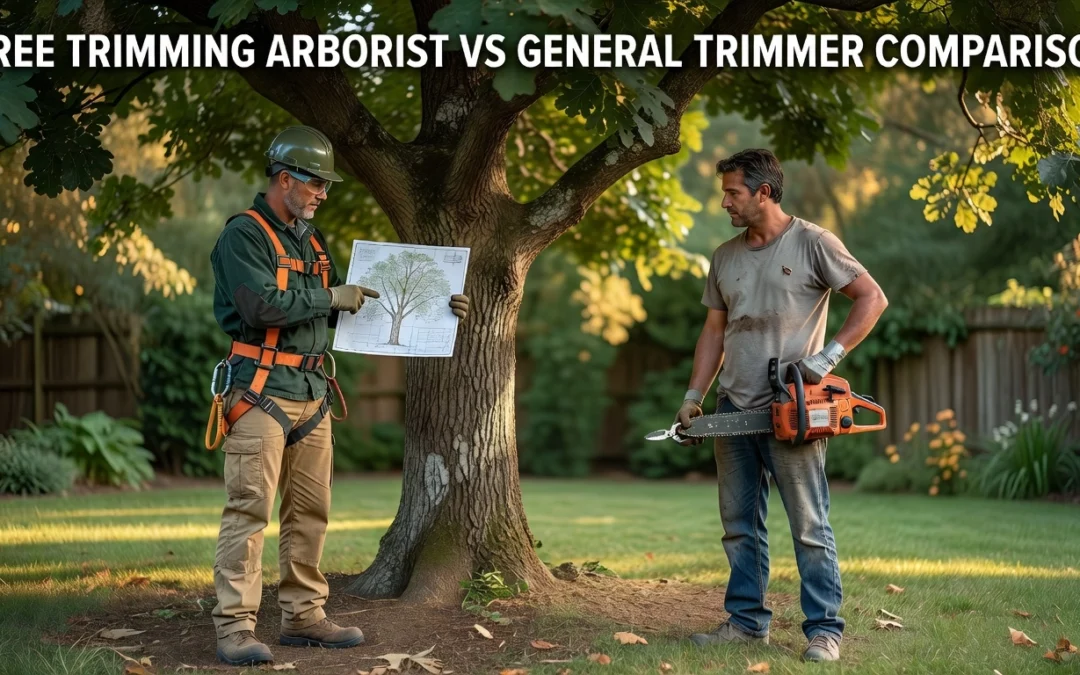
Imagine this: your backyard oak, once majestic, now looks ragged after a hasty trim. Branches dangle awkwardly, and worse, the tree seems stressed and vulnerable to disease. Such mishaps happen too often when homeowners hire the wrong person for tree trimming arborist services. As a beginner navigating yard maintenance, you deserve clarity on who to trust.
In this comparison, we pit certified tree trimming arborists against general trimmers. Arborists hold specialized credentials, backed by years of training in tree biology, safety protocols, and proper pruning techniques. General trimmers, while handy with tools, often lack this depth of knowledge. They might cut costs upfront, but the long-term risks to your trees health and property can prove far more expensive.
By the end of this post, you will understand key differences in expertise, tools, pricing, and outcomes. You will learn how to spot a qualified tree trimming arborist, avoid common pitfalls, and make an informed choice that protects your landscape investment. Knowledge empowers better decisions; lets dive in.
What Defines a Tree Trimming Arborist
A tree trimming arborist stands out as a certified expert in scientific tree care, prioritizing health, safety, and longevity over mere aesthetics. Unlike unlicensed trimmers who focus on quick cuts for shaping or clearance, arborists hold credentials like the International Society of Arboriculture (ISA) Certified Arborist designation. This requires at least three years of full-time experience (6,000 hours), education points from forestry or related fields, and passing a rigorous 200-question exam on topics from tree biology to risk assessment, with a 76% passing score. Certification demands renewal every three years via 30 continuing education units (CEUs) from workshops, webinars, or conferences, ensuring expertise against evolving threats like pests and storms. Unlicensed trimmers, by contrast, rely solely on on-the-job tool training without exams or ongoing education, risking improper cuts that weaken trees.
ISA Certification vs. Unlicensed Trimmers
Arborists delve into tree biology for health assessments, diagnosing decay, soil issues, or stressors to promote 20-50 year lifespans through targeted treatments. They avoid cosmetic-only trimming that leads to decay from flush cuts or over-pruning. Instead, focus shifts to long-term vitality via airflow improvement and balanced canopies.
Arborist-Specific Services
Specialized offerings include structural pruning (crown thinning 10-20% for stability), deadwooding to prevent falls, and risk evaluations using tools like resistographs near power lines or homes. Learn more on arborist pruning techniques.
Surging Demand in 2026
With the tree services market hitting $1.7 billion in 2026 and growing at 13.9% CAGR to $2.86 billion by 2030, demand for certified pros surges amid urbanization and storm risks. Verify credentials at TreesAreGood.org for safe, expert care like storm prep or pruning. Key differences between arborists and trimmers.
General Tree Trimmers Explained
General tree trimmers, distinct from certified tree trimming arborists, usually acquire skills through short-term on-the-job training, informal apprenticeships, or basic vocational programs rather than rigorous formal certification. In most states, no license is required for entry-level work, needing only a high school diploma, age 18 or older, and safety basics like ANSI Z133 standards or first aid. This contrasts sharply with ISA-certified arborists, who complete years of study, exams on tree biology, and ongoing education. For beginners, understand that this setup allows quick entry but often lacks depth in tree health knowledge. Learn more about becoming a tree trimmer.
Common Tasks and Practices
These workers handle routine jobs like basic limb removal, hedge shaping, clearing branches near power lines, and debris cleanup. They prioritize speed and immediate aesthetics or hazard fixes, sometimes using improper cuts that weaken trees long-term. Examples include topping large branches or flush pruning, which can invite disease unlike science-based arborist techniques. While effective for simple residential needs, this approach risks tree decline or property damage.
Prevalence, Risks, and Wages
With 165,007 U.S. tree trimming businesses in 2024 (up 5.6% yearly per IBISWorld), options abound, yet higher error risks persist due to limited training; tree care fatalities are 15 times the U.S. average. The 2023 BLS median wage of $49,070 (about $23.59/hour) underscores its entry-level status, varying by region but below certified pros. For safety in Kitsap County, especially with storms, opt for experienced specialists over generalists. Washington tree trimmer training overview. This prevalence highlights why verifying qualifications matters before hiring.
Core Differences in Approach and Techniques
Pruning Methods: ANSI Standards vs. Topping
Certified tree trimming arborists adhere strictly to ANSI A300 standards, crafted by the Tree Care Industry Association for science-based pruning. These guidelines promote natural shaping through techniques like crown cleaning to remove deadwood, thinning for better airflow, and selective reduction to strengthen structure. Each cut targets the branch collar to seal wounds quickly and prevent decay. In contrast, general trimmers often top trees by hacking off major limbs to stubs, which ANSI explicitly bans as it starves the tree of leaves, sparks weak sprouts prone to breakage, and invites pests. Studies show topped trees face 5-10 times higher long-term costs and reduced lifespan. For Kitsap homeowners, choosing ANSI-compliant pruning ensures storm resilience in our wet climate. ANSI A300 Pruning Standards
Tools: Precision Gear vs. Basic Chainsaws
Arborists deploy advanced tools like grapple saws, mounted on cranes for safe, remote cuts up to 100 feet high, slashing job times by 30-50 percent amid industry labor shortages. These pair with aerial lifts and resistographs to probe decay without harm. Trimmers stick to handheld chainsaws and pole pruners, effective for minor tasks but risky for tall or complex jobs lacking rigging. This precision gap minimizes tree trauma and worker hazards, vital in a field with fatality rates 15 times the U.S. average.
Risk Assessments: Full Inspections vs. Visual Checks
Arborists execute thorough Tree Risk Assessments using ISA protocols, from ground visuals to climbed exams with tools detecting hidden root or trunk issues. They factor in targets like homes and failure odds, catching 30-50 percent more risks than surface scans. Trimmers limit to quick visual spots for obvious dangers, often missing subsurface threats. Arborists vs. Tree Trimmers
Seasonal Timing for Kitsap County
In Kitsap’s mild, rainy Puget Sound climate, arborists recommend summer (June-August) for most pruning to leverage dry heat for fast wound healing and low fungal risk. This timing suits shaping over-vigorous evergreens or post-bloom ornamentals, boosting recovery before wet winters. Avoid fall to dodge frost vulnerability. Schedule now with pros like Lefler Tree Service for optimal results. Difference Between Arborist and Tree Trimmer
Pros and Cons of Arborist Tree Trimming
Pros of Arborist Tree Trimming
Certified tree trimming arborists deliver precise cuts that enhance tree health by removing dead or diseased branches, improving air circulation, and promoting vigorous growth. This science-based approach prevents pest infestations and extends tree lifespan, often including soil assessments for comprehensive care. In storm-prone Kitsap County, where wind events like recent “bomb cyclones” down mature trees and disrupt power for thousands, arborists thin canopies and eliminate weak limbs to boost wind resistance; proactive risk assessments identify hazards before disasters strike, as recommended by local experts Tips to protect trees from wind. Proper shaping also elevates property aesthetics and value, with studies showing mature trees can increase home worth by 10-15% How healthy trees boost property value. Their ANSI Z133 training slashes the industry’s 15x average fatality rate through rigorous safety protocols, protecting crews and your property.
Cons of Arborist Tree Trimming
The expertise of tree trimming arborists comes at a higher upfront cost due to certification, specialized gear like aerial lifts, and insurance, making it pricier than basic services. Thorough inspections for structural risks and diseases extend assessment times, delaying projects compared to quick trims. However, these investments prevent costly future repairs from improper cuts. For beginners, start by requesting quotes and verifying ISA certification to weigh value.
Overall, pros dominate for long-term safety and resilience in forested areas like Kitsap Pros and cons of hiring an arborist.
Pros and Cons of General Trimming
Pros of General Tree Trimming
General tree trimming provides practical benefits for budget-conscious homeowners tackling simple tasks. Costs are notably lower than those from certified tree trimming arborists, often appealing for routine maintenance without in-depth health evaluations. Services deliver quicker turnaround, perfect for urgent jobs like power line clearance or removing overhanging limbs after minor storms. This speed suits residential properties in forested areas such as Kitsap County, where fast action prevents utility disruptions. It also works well for minor aesthetic touch-ups on healthy, young trees under 15 feet, improving shape, sunlight access, and curb appeal with light pruning that enhances air circulation.
Cons of General Tree Trimming
Risks arise from a lack of scientific training, as non-experts may make flush or oversized cuts that harm the tree’s branch collar and vascular system. These wounds invite decay, pests like borers, and diseases such as oak wilt, weakening the tree and raising failure chances during high winds. Topping exemplifies this error: drastically reducing height by cutting main stems to stubs starves the tree of energy, sparks weak water sprouts, and accelerates rot, often leading to emergency removals and higher costs down the line. Purdue Extension warns against topping, noting it violates ANSI standards. With tree care’s high fatality rate 15 times the U.S. average, improper work amplifies safety hazards too. For mature trees, these cons underscore the value of professional assessment over quick fixes.
Safety Risks and Statistics
Tree Care Fatality Rates: 15x the National Average
Tree trimming and arborist work ranks among the deadliest U.S. professions, with fatality rates approximately 15 times the national all-industry average of 3.4 to 3.8 deaths per 100,000 full-time workers. According to TCIA data, this impacts around 63,700 workers in tree pruning and removal, where falls from heights account for 30 to 40 percent of deaths, struck-by incidents like falling limbs claim 38 to 43 percent, and electrocutions make up 14 to 15 percent. Non-fatal injuries hit 239 per 10,000 workers, far exceeding the all-industry rate of 89, often from chainsaw cuts or strains. For beginners, this underscores the peril of improper techniques; over 66 percent of fatalities involve workers with less than one year of experience. Certified tree trimming arborists address these through structured training, while undertrained trimmers amplify risks with hasty cuts near power lines or unstable branches.
Arborist Mitigations vs. Undertrained Trimmers
Certified arborists employ Tree Risk Assessment Qualifications (TRAQ) for systematic inspections of structural weaknesses, paired with personal protective equipment (PPE) like harnesses, helmets, and chainsaw chaps that slash severe climbing injuries by 60 percent. These protocols, rooted in ISA standards, enable precise pruning to bolster tree stability and prevent failures. In contrast, undertrained trimmers often skip risk assessments, leading to higher incident rates; small firms without safety manuals contribute to 50 percent of fatalities. Actionable insight: Always verify ISA certification before hiring to ensure TRAQ and OSHA Z133 compliance.
2026 Trends: Drones and AI for Safer Inspections
Looking to 2026, drones equipped with LiDAR and thermal imaging will cut climbing needs by enabling remote canopy checks, reducing fall risks that cause 34 percent of deaths. AI platforms analyze data for predictive hazard modeling, potentially lowering accidents by 25 percent amid labor shortages. These tools offer 99 percent accuracy in flaw detection, a game-changer for storm preparation.
Surging Demand for Certified Protocols
With 83,571 tree trimmers and pruners in 2024 and 17.7 percent annual growth since 2018, demand surges for certified safety experts handling pruning, shaping, and emergency removal. Beginners should prioritize pros with these credentials for Kitsap County’s forested properties.
Property Benefits from Arborist Expertise
Improved Aesthetics and Shaping for Curb Appeal
Hiring a tree trimming arborist elevates your property’s visual appeal through expert shaping and pruning that creates balanced, natural forms. Certified professionals follow ANSI A300 standards to selectively remove overcrowded branches, allowing better light penetration and airflow for denser, healthier foliage. This enhances curb appeal significantly; well-maintained trees can boost home values by up to 15%, according to real estate data. In Kitsap County, where lush landscapes define neighborhoods, precise shaping prevents overgrown limbs from obscuring views or clashing with architecture. Arborists also address power line issues by directing growth away from utilities, maintaining safe clearances of 10-20 feet to avoid outages or hazards. At Lefler Tree Service, our team delivers these transformations, turning ordinary yards into standout properties that impress neighbors and potential buyers.
Storm Preparation via Deadwooding in Kitsap County
Deadwooding by a tree trimming arborist is essential storm preparation in wind-swept Kitsap County, where gusts often exceed 50 mph during Pacific Northwest storms. Removing dead, dying, or weak branches reduces wind resistance and prevents limbs from snapping, which accounts for 70% of storm-related tree failures. Proactive assessments identify risks like leaning trunks or fungal decay early, thinning canopies to minimize damage. This approach extends tree lifespans by up to 50% and cuts insurance claims tied to fallen debris. Lefler Tree Service’s arborists perform thorough property evaluations, ensuring your trees withstand local weather patterns effectively.
Healthier Growth and Lower Future Removal Costs
Expert pruning promotes healthier tree growth by redirecting energy to strong branches, curbing disease spread, and fostering structural integrity. This preventive care slashes the need for expensive removals later; trimming costs $430-$640 per tree on average, versus $820-$2,000+ for full takedowns. The U.S. tree services market reflects this demand, projected to grow from $1.7 billion in 2026 to $2.86 billion by 2030 at a 13.9% CAGR, driven by residential maintenance. Arborists integrate techniques like crown cleaning for optimal vigor, saving homeowners thousands over time.
Emergency Readiness Through Proactive Pruning
Proactive pruning builds emergency readiness, avoiding frantic post-storm calls for downed limbs. Studies show trimmed trees reduce power outages by 16-48% during events. In Kitsap, this means fewer urgent interventions after heavy rains. Lefler Tree Service emphasizes these strategies for resilient landscapes.
Kitsap County Specific Considerations
Kitsap County’s expansive forests, boasting a 54.1% tree canopy dominated by Douglas fir and western hemlock, fuel strong residential demand for certified tree trimming arborists. Local reviews and service requests underscore the need for experts to manage overgrown properties amid development pressures, preventing hazards like root rot and over-clearing. In contrast to general trimmers, arborists conduct risk assessments tailored to these conifer-heavy landscapes, ensuring long-term health over quick fixes.
Frequent winter storms, with 40-60 inches of annual rain and events like the 2018 Port Orchard tornado downing trees across 250 homes, demand proactive shaping for resilience. Arborists recommend dormant-season pruning (late winter to early spring) to reduce wind sail and crown density, outperforming general trimmers’ reactive approaches that risk further damage. Summer suits light aesthetic trims on vigorous branches, minimizing stress.
Opt for experienced, family-owned operations like Lefler Tree Service, serving since 1988 with over 35 years in Kitsap. Their local knowledge excels in Port Orchard and Bremerton for precise pruning, 24/7 emergency removal, and storm prep, delivering safer, customized results versus inexperienced options. This expertise aligns with rising trends in certified care amid climate risks.
Actionable Takeaways for Hiring
Verify Credentials First
Before booking any tree trimming arborist, confirm ISA certification and check references to ensure expertise. Certified professionals follow ANSI A300 standards, reducing risks like improper cuts that harm trees or property. For instance, in high-risk Kitsap County with its dense forests, uncertified trimmers contribute to the industry’s 15x average fatality rate. Call providers directly; Lefler Tree Service, with over 35 years in Kitsap, exemplifies this commitment.
Prioritize Risk Assessments
Schedule a risk assessment for mature trees near homes or power lines, especially before storms. Arborists use tools like drones for precise evaluations, spotting hazards general trimmers might miss. This preventive step aligns with 2026 trends in tech adoption, boosting efficiency amid a $1.7 billion market growing to $2.86 billion by 2030.
Choose Arborists for Complex Tasks
Opt for tree trimming arborists over basic trimmers for pruning, shaping, and storm prep; they promote health and resilience. General services suit minor jobs, but arborists excel in structural work, preventing damage from events like Kitsap’s frequent winds.
Get Local Quotes and Monitor Trends
Contact Kitsap providers for quotes, emphasizing safety and health expertise. As residential services hit 43% market share, watch 2026 shifts like AI platforms and grapple saws for faster, safer service. This ensures long-term value for your property.
Conclusion
In summary, certified tree trimming arborists bring specialized training in tree biology, safety, and pruning techniques that general trimmers often lack. Arborists use professional tools and methods to ensure healthy outcomes, while general trimmers risk tree stress, disease, and property damage despite lower upfront costs. You now know how to spot credentials like ISA certification, compare pricing for true value, and dodge common pitfalls.
This comparison equips you with the knowledge to safeguard your landscape and avoid expensive mistakes. Act now: research local arborists, request references, and schedule a consultation with a certified pro. Your trees will flourish, your yard will thrive, and you’ll enjoy peace of mind for years to come.