

If you’ve ever typed “tree trimming services near me” into a search bar while staring at an overgrown Douglas fir in your backyard, you already know the results can feel a little overwhelming. But here’s the thing: finding a great tree trimming company in Poulsbo, WA isn’t just about picking someone with good reviews. It’s about finding someone who understands the specific landscape, regulations, and tree species that come with living in North Kitsap.
Poulsbo’s heavily wooded lots, proximity to wetlands and conservation corridors, and Kitsap County’s permitting rules mean that tree trimming here comes with a few extra layers that most generic searches simply won’t tell you about. Go in without that knowledge and you might end up with surprise fees, permit delays, or a contractor who isn’t familiar with local critical area requirements.
This guide is built specifically for Poulsbo homeowners. You’ll learn which tree species you’re likely dealing with, when a permit might be required, how conservation buffers could affect your property, and exactly what to ask before you hire anyone. Let’s break it all down.
Why Tree Trimming in Poulsbo Is Different From a Generic Search
Typing “tree trimming near me” into a search bar pulls up results from across Kitsap County and beyond, most of which have no specific knowledge of Poulsbo’s neighborhoods, native species, or the conservation landscape that makes many local lots genuinely different from a standard suburban yard.
Here’s the thing: a large share of Poulsbo’s residential properties sit alongside North Kitsap’s forested conservation corridors. That means your lot may border a drainage course, a seasonal stream, or a wetland buffer zone. Those features affect how trimming work should be planned, and a contractor who doesn’t know to look for them may quote your job as if it were a straightforward canopy cleanup.
Kitsap County’s timber harvest regulations and its Critical Areas Ordinance create considerations that don’t apply uniformly across every property. Work near critical areas can trigger review thresholds that a generic contractor simply may not flag before starting. The result: unexpected delays or added costs mid-project.
Homeowners who arrive at that first contractor call already knowing their lot’s context get faster, more accurate quotes and ask sharper questions. That’s exactly what this guide is here to help with.
The Tree Species You Are Probably Working With in North Kitsap
Starting with local species knowledge gives you a real advantage before any contractor shows up. Here is what you are most likely dealing with on a North Kitsap residential lot.
- Douglas fir is the dominant large-canopy species; an arborist familiar with it can advise on the right crown management approach for your specific tree.
- Western red cedar is common near drainage areas and low spots; timing and method are worth discussing with your contractor given the species’ sensitivities.
- Big-leaf maple and red alder are often found along lot boundaries and riparian edges; ask your contractor about appropriate pruning methods for each.
- Western hemlock is present throughout North Kitsap and can appear as volunteer growth; identifying it early helps you decide how to manage it.
- English holly and Scotch broom are invasive species present in Kitsap County; a contractor familiar with local conditions can advise on an appropriate management approach.
Knowing which species you have before a contractor visits means you can ask specific questions about method, timing, and tree health rather than accepting a generic approach. Our expertise in Kitsap native trees is built on decades of working with exactly this mix.
When Tree Trimming Requires a Permit in Kitsap County
Knowing your species is useful context. Knowing whether your project needs county sign-off before work starts is even more critical.
Kitsap County regulates tree and timber work under Chapter 18.16, which focuses on forest practices that convert forested land to another use, such as residential development. Routine crown maintenance on an established residential tree is generally unlikely to trigger those requirements. The word “generally” matters, because the distinction depends on three things: the scope of the work, the location on your lot, and the purpose behind it.
Work outside routine maintenance is more likely to draw county attention:
- Significant canopy removal beyond standard pruning
- Clearing tied to a development project or change in land use
- Work near a drainage course, stream, or wetland, where critical area protections apply
If your lot is large, heavily wooded, or backs up to any drainage feature, don’t assume you’re in the clear without checking.
For trimming questions, the most practical first step is a DCD Review Team meeting. Kitsap County’s Department of Community Development offers staff consultations where you can describe your planned work and get direct guidance on whether any approval is needed.
Once you have that clarity, share it with your contractor before they visit. It helps them scope the job accurately and flag anything requiring county coordination upfront, protecting your timeline and budget.
Conservation Areas and Critical Buffers: Does Your Lot Qualify?
Permit thresholds aren’t the only thing that can shape the scope of your trimming project. Even when a permit isn’t required, your lot’s proximity to a protected environmental zone can affect what a contractor can do and where.
Kitsap County’s Critical Areas Ordinance establishes buffer and setback requirements for work near streams, wetlands, and other sensitive zones. If your lot borders a drainage course, seasonal stream, or forested wetland, restrictions may limit how close to that boundary any trimming activity can occur, which affects both the scope of the work and the final cost.
The good news is you can check before anyone visits your property. The Kitsap County Parcel Search and Interactive Map at psearch.kitsap.gov lets you look up your specific parcel and see whether it carries any critical area flags.
Critical area adjacency doesn’t automatically create problems; plenty of trimming work proceeds without issue. But contractors who know Poulsbo’s conservation landscape will factor buffer considerations into their estimates upfront. Those who don’t may quote a job that later runs into complications neither of you saw coming.
What to Check Before You Call a Tree Trimming Company
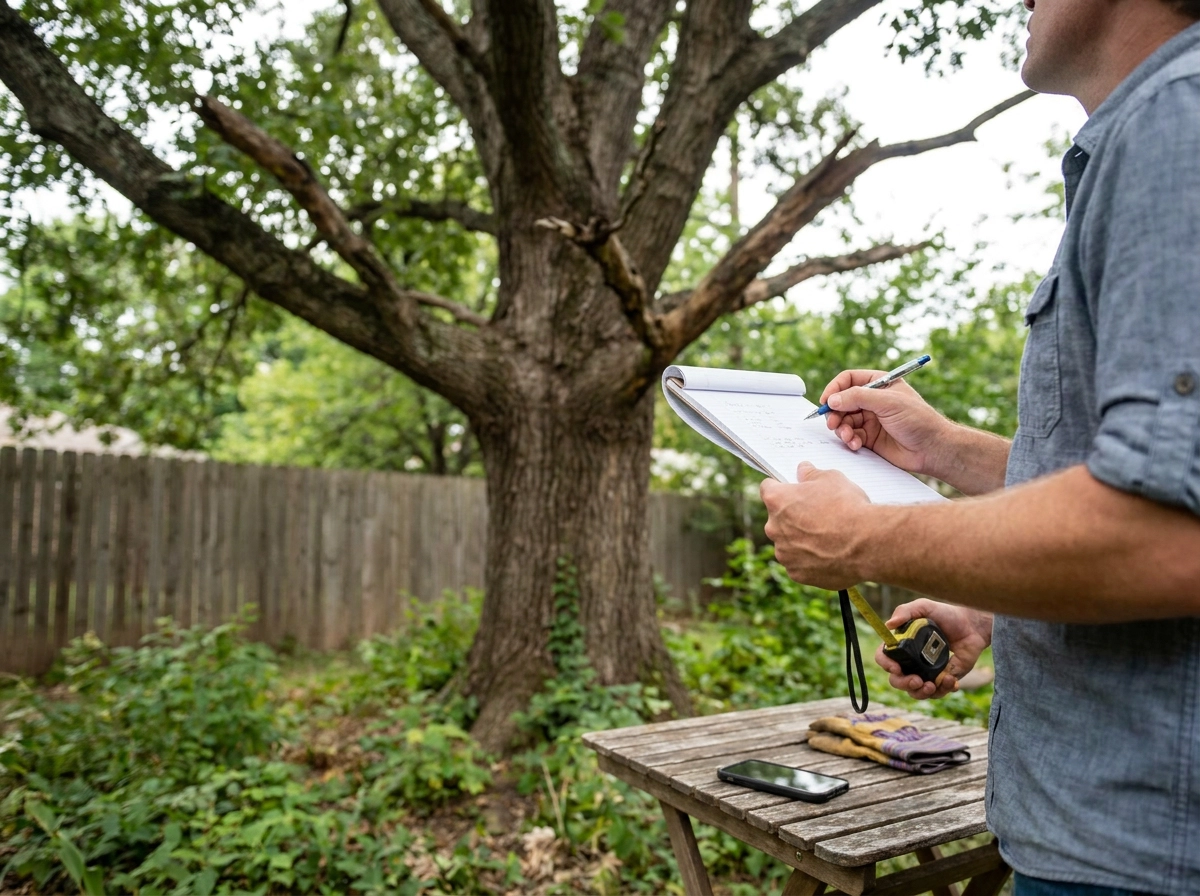
Once you know what your parcel looks like on the map, pull together a few quick details before you call a contractor. Contractors give faster, more accurate quotes when you come prepared.
Here’s what to gather first:
- Confirm your parcel’s zoning and any critical area designations on the Kitsap County Interactive Map (psearch.kitsap.gov), the prior section walks through what to look for.
- Note where the trees are on the lot. Trees near a property line, fence line, or ground sloping toward a drainage feature are most likely to involve extra planning. Flag those specifically.
- Identify your trees, or at least describe them. Species names help, but even approximate height, canopy spread, and lot location gives a contractor enough for a realistic estimate.
- Be clear on your goal. Routine seasonal shaping is a different scope than removing heavy limbs over a roof, reducing canopy near a power line, or preparing for storm season. Know which category your job falls into.
- If your lot is heavily wooded or stream-adjacent, a brief DCD Review Team pre-consultation can resolve permit questions before you collect quotes.
Arriving at that first call with this information means less back-and-forth, more accurate quotes, and a smoother job overall.
What to Ask Any Tree Trimming Company in Poulsbo
Once you have your lot info in hand, put these six questions to any contractor before you commit.
- Do you carry liability insurance and workers’ compensation? Aerial and chainsaw work carries real injury risk. Ask for proof of both coverages before anyone sets foot on your property. An uninsured crew can leave you holding the bill if something goes wrong.
- Are you familiar with Kitsap County’s Chapter 18.16 timber harvest framework and when it applies to residential work? You’re finding out whether they’ll flag permit considerations on your behalf or leave that research to you.
- Does your crew include an ISA-certified arborist? The International Society of Arboriculture is a recognized authority on tree assessment and structural evaluation; certification signals someone on the crew can evaluate tree health, spot structural problems, and recommend appropriate approaches.
- What trimming methods do you use for my specific species? Crown thinning on a Douglas fir is not the same as directional pruning on a big-leaf maple. A one-size approach can cause lasting damage. Species-specific answers signal real knowledge.
- Does your quote include debris hauling and cleanup? Forested lots generate significant volume. Confirm it’s scoped in, not an add-on.
- Can you provide references from Poulsbo or North Kitsap? Local experience with the species mix, topography, and conservation adjacency here translates directly into fewer surprises on the job.
Storm Preparation and Seasonal Timing for Poulsbo Tree Trimming
Once you have your contractor questions sorted, timing your trimming work strategically can make a significant difference in outcome.
Western Washington’s wetter months bring wind events that can stress tree structure, trimming proactively rather than reactively is a common-sense approach regardless of season. That makes late summer and early fall a practical window for hazard reduction. Proactive trimming avoids the urgency and limited contractor availability that follows a storm event.
For storm preparation specifically, a qualified arborist can assess which limbs and structural features pose the greatest risk on your specific trees.
Scheduling work earlier in the season also tends to give you better contractor availability before demand spikes following storm events. Contractor availability and lead times typically tighten after major wind events, so scheduling proactively works in your favor.
Why Local Experience Matters When Choosing a Tree Trimming Service
All of that pre-hire preparation pays off most when the company you call actually knows the territory. A contractor who has worked Kitsap County lots for decades will recognize a conservation-adjacent drainage setback, know how Douglas fir responds to crown thinning in North Kitsap’s wet climate, and ask the right questions before scoping your job rather than after.
Lefler Tree Service has been serving Kitsap County homeowners since 1988, which translates to more than 35 years of hands-on experience with the exact species, slope conditions, and lot configurations common throughout Poulsbo and the surrounding North Kitsap area. That kind of tenure means the team has seen most situations before, including the ones that catch out-of-area contractors off guard.
A few other practical advantages of choosing a locally rooted service:
- Single-contractor simplicity. Beyond trimming and pruning, Lefler handles tree removal, shaping, and storm response, so you are not piecing together multiple contractors for different parts of the same job.
- Fewer surprises. Local knowledge reduces the risk of mid-project complications, whether those involve tree health, lot access, or conservation-area boundaries that affect how work gets scoped.
When you are comparing tree trimming companies near you, genuine Kitsap County experience is one of the clearest signals that a quote will reflect your actual lot, not a generic estimate built somewhere else.
Before You Hire: A Quick Recap for Poulsbo Homeowners
Before you pick up the phone, run through this short checklist:
- Look up your parcel on the Kitsap County Interactive Map (psearch.kitsap.gov) to check for critical area designations.
- Know your trees and your goals. Identify the main species you’re working with and decide whether you need routine maintenance, storm prep, canopy reduction, or something else. A contractor can scope and price a job much faster when you come in with specifics.
- Ask about permits upfront, especially if your lot is wooded or near a drainage feature.
- Vet your contractor carefully. Prioritize companies with verifiable Kitsap County experience, current liability insurance and workers’ comp, and clear methods suited to the species on your property.
- Proactive trimming before storm season improves availability and gives you time to address any permit questions for lots near critical areas.
That’s the short version. The full picture is in the sections above.
Conclusion
Hiring a tree trimming company in Poulsbo is not a decision to make with a quick internet search and the lowest quote. Your property sits within a specific regulatory environment, supports species that require local knowledge, and faces seasonal weather patterns that demand proactive planning.
The homeowners who get the best results take a few simple steps first: they research their lot, understand their trees, confirm permit requirements, and choose contractors with genuine Kitsap County experience.
That preparation protects your investment and avoids costly surprises.
If you are ready to move forward, start with the Kitsap County Interactive Map, review the questions outlined above, and reach out to a qualified local arborist before fall storm season arrives. A well-trimmed property is safer, healthier, and more resilient. Take the first step today.