You just received a tree inspection report, and now you’re staring at words like “co-dominant stems,” “failure potential,” and “high risk rating” wondering what any of it actually means for your Saturday afternoon plans. You’re not alone. Most homeowners hand that paper straight back to whoever gave it to them and say, “So what do we do?”
Here’s the thing: a tree inspection report is only useful if you can read it. And reading it doesn’t require an arboriculture degree. It just requires someone to translate the jargon into plain English, which is exactly what this guide does.
By the time you finish reading, you’ll know what level of inspection you received and what that means for your findings, what risk categories like “probable” and “imminent” actually mean in practice, and how to decode the timeline recommendations arborists use. You’ll also understand why Kitsap’s specific climate and tree species add a layer of context that matters when you’re weighing your next steps. Consider this your owner’s manual for the report sitting on your kitchen counter.
What Kind of Tree Inspection Did You Get?
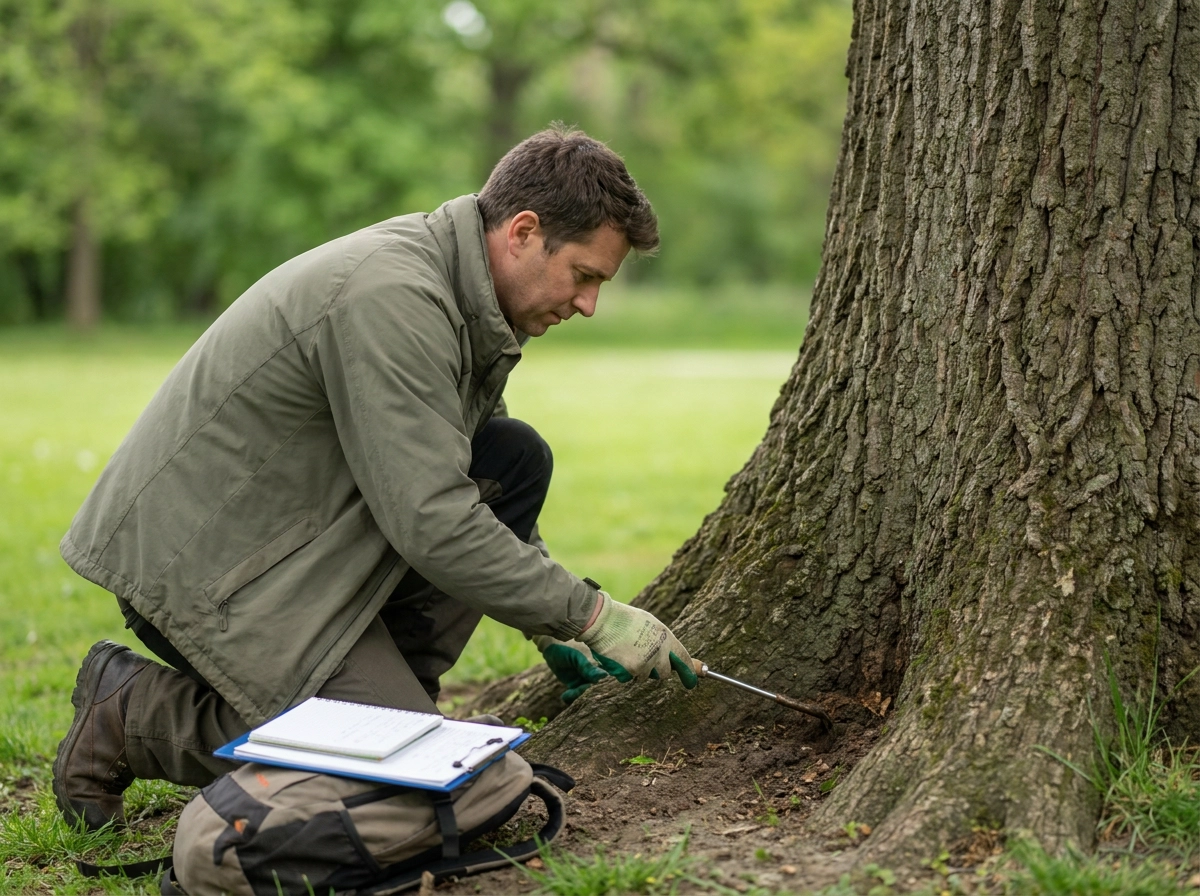
Before you can make sense of what your report says, you need to know how thorough the inspection actually was. Industry practice commonly groups inspections into three phases, though terminology varies by practitioner and no single mandatory naming convention applies nationwide.
The first phase is a visual walk-by. An arborist scans for obvious hazards, things like hanging limbs, visible decay, or a significant lean. It’s a useful starting point, but it won’t catch everything.
The second phase is the inspection most homeowners receive after requesting a tree health assessment from a qualified arborist. It’s a full 360-degree evaluation that takes in the trunk, canopy, and surrounding soil conditions. If you asked for a dedicated inspection and paid for it, this is most likely what you have. It gives a much more complete picture of the tree’s structural condition.
The third phase goes further still. It typically involves climbing the tree, excavating around the root zone, and using specialized tools to detect internal decay that isn’t visible from the outside. This level is generally reserved for situations where the stakes are high, such as a large tree directly over a home, an insurance claim, or a case where a previous inspection flagged a serious concern that needs deeper investigation.
Why does this matter? Because a clean walk-by finding is not the same as a clean comprehensive report. If your report doesn’t state which phase was performed, ask before you act on the findings. For borderline trees, knowing you only received a walk-by assessment might be reason enough to schedule something more thorough.
How Arborists Actually Rate Tree Risk
Once you know what level of inspection you received, the next question is: what do the findings actually mean? That starts with understanding how arborists measure risk.
Three assessment methods are widely accepted across North America: the ISA Tree Hazard Evaluation Method, the USDA Forest Service Community Tree Risk Evaluation Method, and the ISA Tree Risk Assessment Best Management Practice (BMP) Method. Which method your arborist follows affects how your report looks.
Older reports used numbers. That created problems.
Early methods produced a final numerical score, such as a 6 or an 8 out of 12. Those numbers were qualitative judgments expressed as math, not actual measurements. A score of 8 from one arborist on one tree didn’t mean the same thing as an 8 on a different tree assessed by someone else, creating a false sense of precision.
The current standard uses plain language instead.
The updated ISA BMP method replaced numerical rankings with four descriptive likelihood categories: improbable, possible, probable, and imminent. These map directly to how urgent a finding is, which makes them more useful when deciding whether to call an arborist this week or this season.
No single rating, numeric or descriptive, automatically means a tree must come down. Ratings prioritize which trees need attention first, not deliver a verdict on any one tree.
Every risk rating combines two factors: how likely the tree or a part of it is to fail, and how likely that failure is to hit something, a person, a roof, a parked car. That second factor is called the “target.” A large tree leaning over an empty field carries very different risk than the same tree leaning over your house. If you’re unsure what a tree health assessment covers or how target assessment factors into your findings, ask before drawing conclusions.
If your report uses numbers, ask your arborist to translate them into the improbable-to-imminent scale. That single conversation can change how you interpret everything else on the page.
Plain-Language Glossary of Common Report Terms
Here are the terms you’re most likely to encounter in your report.
Cavity: A hollow area inside the trunk or a branch caused by decay. The presence of a cavity alone doesn’t tell you much; size and location do. A small cavity in a lower branch is a minor concern. A large cavity at the base of the trunk is a structural issue that can affect the whole tree’s stability.
Deadwood: Dead branches that will eventually fall on their own. Location is what drives priority. Deadwood sitting over your roof, driveway, or a play area needs attention sooner than dead branches tucked into the tree’s interior where nothing is at risk below.
Codominant leaders: Two or more main stems growing upward at roughly the same size from the same point. When those stems grow at narrow angles toward each other, they compete for space and create a weak joint. That joint is vulnerable to splitting under wind or snow load, both of which are common in Kitsap winters.
Included bark: Bark that gets trapped between two stems as the tree grows. Instead of forming a solid wood-to-wood connection, the stems are essentially growing around bark, which creates a weak union. Included bark is one of the more common reasons branches or stems fail during storms. If your report flags it on a large stem over a structure, treat it seriously.
Lean: Not all lean is a problem; many trees grow at an angle simply because they’re reaching for light. The lean worth paying attention to is one that has changed recently, comes with soil heaving around the base, or points toward your house, fence, or vehicle.
Crown dieback: Dead branch tips progressing inward from the outer edges of the canopy. It often points to something happening below ground, including root damage, disease, drought stress, or compacted soil. It warrants investigation before the underlying cause gets worse.
What the Timeline Recommendations Actually Mean
Each defect your arborist flags comes with a recommended action window. Most ISA-qualified arborists follow a tiered structure when recommending follow-up. The exact labels vary, but the logic is consistent.
The most urgent tier signals that a defect is a high-risk failure waiting for the right conditions. A strong wind event or heavy rain could be enough to bring it down. Do not wait for a seasonal appointment or a convenient opening in your schedule. Act before the next storm rolls through.
A middle tier indicates the tree is not about to fail today, but the defect is progressing. Scheduling follow-up promptly is appropriate. Waiting longer often means the work becomes more complicated, more expensive, or both.
A monitoring recommendation is where homeowners frequently make a mistake. Seeing “monitor” on a report can feel like a green light to do nothing. It isn’t. It means your arborist wants to observe how the condition develops through weather changes, drought, or leaf-out before recommending a specific intervention. You should expect a follow-up assessment, not a clean bill of health.
Re-inspection recommendations for mature trees or any tree with a documented defect reflect the reality that conditions shift year to year. A clean report from last spring does not guarantee the same findings this spring, especially after a wet winter in Kitsap.
One more thing specific to this region: if your report recommends pruning before storm season, treat that as a firm deadline. Pacific Northwest windstorms arrive in fall and move fast. Matching each timeline recommendation to the right type of follow-up before that window closes is what keeps manageable findings from becoming urgent ones.
Why Kitsap Trees Face Specific Risks Worth Knowing
What makes these recommendations especially pressing in Kitsap is the region’s specific soil and weather conditions.
Kitsap County’s soils drain slowly and stay saturated through the wet season. That extended moisture creates ideal conditions for root rot fungi to establish and spread, meaning a root or basal decay finding on a Kitsap report carries more weight than the same finding might in a drier climate. It’s not just a textbook risk; it’s a local one.
Compounding that is the wind. Fall and winter storms rolling off Puget Sound are the most common trigger for tree failures in this region. If your report flags structural defects, significant lean, or included bark, read those findings with the next windstorm already in mind. Those aren’t abstract concerns; they’re conditions that get tested every storm season.
Species matter too. The native conifers and deciduous trees common to the Pacific Northwest each carry known structural characteristics, and a Kitsap-based certified arborist can factor species behaviour into their assessment rather than treating every tree the same way.
Residential density adds another layer. Tall conifers sit directly above homes, fences, driveways, and power lines throughout the county. When a target is present beneath a tree, even a moderate risk finding deserves a harder look than it would for an isolated tree in an open field.
Finally, if your report flags any root zone concerns, pay close attention heading into fall. Saturated soil weakens root anchorage in ways that aren’t visible from the canopy, and a tree that looks healthy in July may be less stable by November.
When to Call a Certified Arborist for Follow-Up
All of that Kitsap-specific context matters most when you’re deciding what to do next. Here’s how to make that call.
If your report flags findings in the “probable” or “imminent” category (described earlier), schedule professional follow-up promptly.
Some pruning work also requires a qualified professional rather than a general trimmer. Deadwood removal over a roof or driveway, crown reduction on a large mature tree, and anything requiring work above ground level all fall into that category. That distinction matters when the job involves height, weight, or a structure below.
For emergency situations, don’t wait. A tree that has partially failed after a storm, or one that is visibly leaning more than it was before heavy rain, needs immediate professional assessment. Calling to schedule a routine visit is the wrong move when conditions are actively changing.
Lefler Tree Service has worked with Kitsap County homeowners since 1988 and can handle the follow-up care your report recommends, whether that’s a single pruning visit or a full tree health assessment if you haven’t had one recently.
When you make that call, bring your written report. A good arborist will work from the existing findings rather than starting over, which saves time and keeps your care history connected.
Finally, the best way to prevent risk ratings from rising is to stay on a maintenance schedule. Annual pruning, crown shaping, and storm preparation before fall windstorm season are all natural next steps after reviewing any inspection report. Consistent care is what keeps manageable findings from becoming urgent ones.
Putting Your Report to Work
You’ve now got the tools to make sense of what your arborist handed you. Knowing the assessment phase tells you how thorough the findings are. Understanding risk language, whether your report uses descriptive terms like “probable” or older numerical scores, tells you how seriously to take each finding. And recognizing defect terms means you’re not guessing at what “included bark” or “crown dieback” actually requires from you.
Run through the timeline sort described earlier to turn the report into an actionable schedule.
If a term stops you cold, come back to the glossary section of this guide. It’s there specifically for that moment.
One thing worth keeping in mind: generic inspection language doesn’t always account for where you live. Remember that Kitsap’s climate amplifies what might otherwise be moderate findings elsewhere. A tree health check from a Kitsap-based arborist adds that regional layer that a standardized report format simply can’t provide on its own.
And if something in your report still isn’t sitting right, a quick call to a local arborist is the lowest-effort, highest-value move available to you. A brief conversation can tell you whether a flagged finding needs action this month or just a note in next year’s calendar.
Conclusion
Tree inspection reports don’t have to be intimidating documents you file away and forget. With the right framework, they become clear, actionable guides for protecting your property and the people on it.
The framework is straightforward: understand the inspection level, parse the risk language, look up any defect terms you don’t recognise, and apply Kitsap’s climate context before deciding how urgently to act.
Your call to action is simple. Pull out your report, run through the timeline sort, and flag any term you’re unsure about. If questions remain, reach out to a certified arborist familiar with the Pacific Northwest.
A tree report is only as valuable as the decisions it drives. Now that you know how to read one, you have everything you need to put it to work.