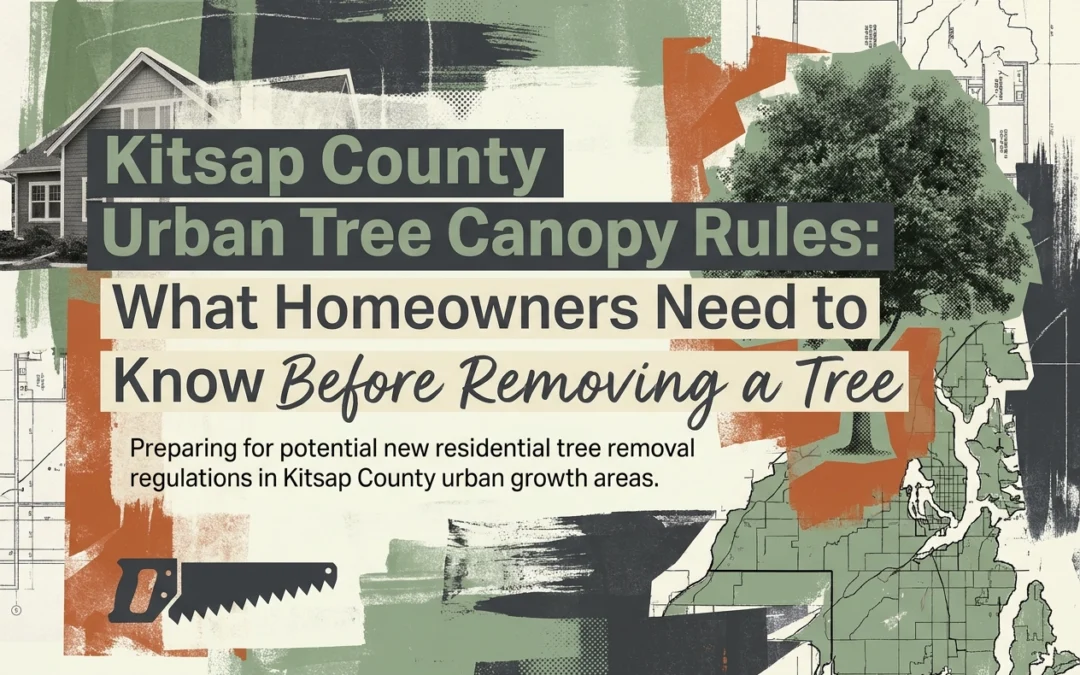
These draft rules would shift tree preservation on private residential lots from a voluntary practice to a potentially mandatory one, meaning removing a tree on your own property could eventually require a formal review process.
The draft rules are aimed specifically at urban growth areas, which are the higher-density zones surrounding cities like Bremerton, Poulsbo, Port Orchard, and Silverdale. That is where most suburban single-family and multi-family homes in Kitsap County sit. If your property falls within one of those boundaries, these regulations are directly relevant to you.
A virtual public workshop presented the proposals and gathered community feedback, which signals this process is well past the early concept stage. The window to act under the current, less restrictive framework is real, but it requires knowing what the draft is actually targeting before making any decisions.
What Is Changing and Why It Matters for Residential Properties
Kitsap County is in the process of developing new urban tree canopy regulations as part of its 2024 Comprehensive Plan update, and if you own a home in the county, it’s worth paying attention now rather than later. The proposed rules would shift tree preservation on private residential lots from a voluntary practice to a potentially mandatory one, meaning removing a tree on your own property could eventually require a formal review process.
The draft rules are aimed specifically at urban growth areas, which are the higher-density zones surrounding cities like Bremerton, Poulsbo, Port Orchard, and Silverdale. That is where most suburban single-family and multi-family homes in Kitsap County sit. If your property falls within one of those boundaries, these regulations are directly relevant to you.
A virtual public workshop presented the proposals and gathered community feedback, which signals this process is well past the early concept stage. Homeowners who want to understand how trees on their property are regulated should note that the process has advanced through public review, though a formal adoption date has not been publicly announced.
The window to act under the current, less restrictive framework is real, but it requires knowing what the draft is actually targeting before making any decisions.
Urban Growth Areas: Does Your Property Fall Inside One?
So the first practical question is: do these draft rules even apply to your property?
A Urban Growth Area (UGA) is a boundary the county draws around cities and higher-density zones where future residential and commercial growth is expected to concentrate. In Kitsap County, UGAs surround incorporated cities and designated growth centers in the region. If your home sits in a suburban neighborhood near any of these areas, there is a reasonable chance your lot falls inside a UGA.
Properties outside a UGA may not be subject to the new rules at all, though you should confirm that as the final language is published.
To check your property’s status, visit Kitsap County’s Department of Community Development (DCD) and use their Community Development Maps and GIS tools. The interactive parcel search lets you look up your address and identify your zoning designation without calling anyone. If you need a plain-language interpretation, DCD staff can help clarify what the map shows.
For Bremerton homeowners in particular, the city’s dense tree canopy already creates specific management considerations, which a Bremerton arborist with local expertise can help you navigate alongside any emerging county requirements.
Confirming your UGA status is the single most useful thing you can do before scheduling a residential tree removal consultation.
What the Draft Rules Appear to Require of Homeowners
Once you know whether your property sits inside a UGA, the next question is: what would these new rules actually ask of you?
The draft framework moves tree preservation from a personal choice to a potential requirement. Some trees may need to stay unless you can point to a qualifying exemption, which is a meaningful shift from how things work today.
Exact thresholds, tree size, diameter, or species triggers, have not been publicly finalized.
The Board of Commissioners has publicly acknowledged a real tension here: strict preservation mandates can complicate development on smaller, constrained urban lots. That concern is on the record, suggesting the final rules may include some flexibility for tighter sites.
Mitigation pathways are also expected to be part of the picture. Comparable municipalities commonly allow replanting or alternative compliance pathways when removal is necessary, though Kitsap’s specific approach is not yet published.
If you want to understand your current obligations before any new rules layer on, the guide to whether you need a tree removal permit in Kitsap County is a useful starting point.
Because enforcement criteria, exemptions, and exact thresholds are all still open questions, now is the time to assess your trees and plan accordingly, not wait for final answers that may arrive with less lead time than you expect.
Hazard Trees and Exemptions: Why Documentation Matters Now
One category that typically survives preservation requirements is the hazard tree, but “I think it looks dangerous” won’t be enough to qualify. Most regulations require documented evidence, not a homeowner’s judgment call.
That’s where a written evaluation from a qualified tree care professional becomes genuinely valuable. A formal assessment that identifies specific structural defects, root damage, disease, active pest infestation, or dangerous proximity to your home creates a defensible record you can point to if your removal is ever questioned.
Conditions that commonly support a hazard designation include:
- Significant trunk decay or cavities
- Severe storm damage that compromises structural integrity
- Root failure or soil heaving near a foundation
- Heavy lean directed toward an occupied structure
- Confirmed pest or disease damage with no viable path to recovery
If any of those sound familiar, our guide on hazardous tree removal for Kitsap County homeowners walks through what to look for in more detail.
Timing matters here. Getting a professional assessment before the new rules are adopted puts your tree’s condition on record under the current regulatory environment, which is likely more flexible than what follows. Waiting means any future exemption claim will be evaluated under stricter standards, with less room to work.
When you’re searching for tree removal companies near you, prioritize those with ISA certification or equivalent credentials. That professional standing is what gives an evaluation its weight when it needs to hold up to outside review.
Timing Your Tree Removal Strategically Before Rules Take Effect
Timing your removal strategically adds another layer of protection beyond documentation. If you have been putting off a removal for safety concerns, a landscaping overhaul, or a construction project, the current regulatory environment is a practical reason to stop waiting. Acting before new preservation requirements are finalized means you are working within the framework that exists today, not navigating one that may be more restrictive tomorrow. That does not mean skipping any existing permits or county notifications; those still apply and should be handled correctly.
The projects most likely to be affected by future rules are also the most common reasons homeowners call for tree removal in Kitsap County in the first place: clearing space near a planned home addition, removing trees to make room for an accessory dwelling unit, or taking down aging trees in established landscaping before they become a bigger problem.
Smaller urban lots carry extra urgency here. The county has acknowledged the tension between canopy requirements and development feasibility on tighter properties, and tree density thresholds could directly conflict with renovation or building plans if you are working with limited square footage.
A professional site assessment now accomplishes something straightforward: it tells you which trees would likely draw scrutiny under the new framework, so your decisions are based on real information rather than guesswork. That clarity is worth scheduling sooner rather than later.
What the Draft Does Not Yet Answer
Even with the direction of the draft rules coming into focus, some important details are still missing from the public record. Understanding those gaps is just as useful as knowing what the draft does say.
Here is what remains unresolved:
- Minimum tree size thresholds. The draft references larger trees as a preservation priority, but no specific diameter measurement that triggers a preservation requirement has been publicly confirmed. Protected species lists are similarly incomplete.
- Grandfathering. Whether removal plans already in progress before adoption will be treated under current rules or new ones has not been addressed. That uncertainty is a real concern for homeowners with projects already underway.
- Enforcement. How the county would identify violations, verify compliance, or structure penalties is not yet detailed in available public materials.
- Permit process complexity. The final rules could establish a simple administrative permit for residential tree removal, or they could require a more involved review. For homeowners with urgent needs, that distinction matters significantly.
- Adoption timeline. The draft has moved through public workshops and planning review, but no official effective date has been announced. The window before adoption is real; its length is not yet known.
If you want to stay current as these details are resolved, monitoring announcements from Kitsap County’s Department of Community Development and attending upcoming public hearings is your most reliable path. It is also worth reviewing how existing rules already affect trimming in sensitive areas, since current obligations do not pause while the new framework is being finalized.
Practical Steps Kitsap County Homeowners Can Take Right Now
While the details are still being sorted out, there are concrete moves you can make today that put you in a stronger position regardless of how the final rules land.
Check your UGA status first. Use Kitsap County’s parcel search tool or contact the Department of Community Development directly to confirm whether your property sits inside a designated urban growth area. If it does, these draft rules are relevant to you. If it doesn’t, your situation may look very different.
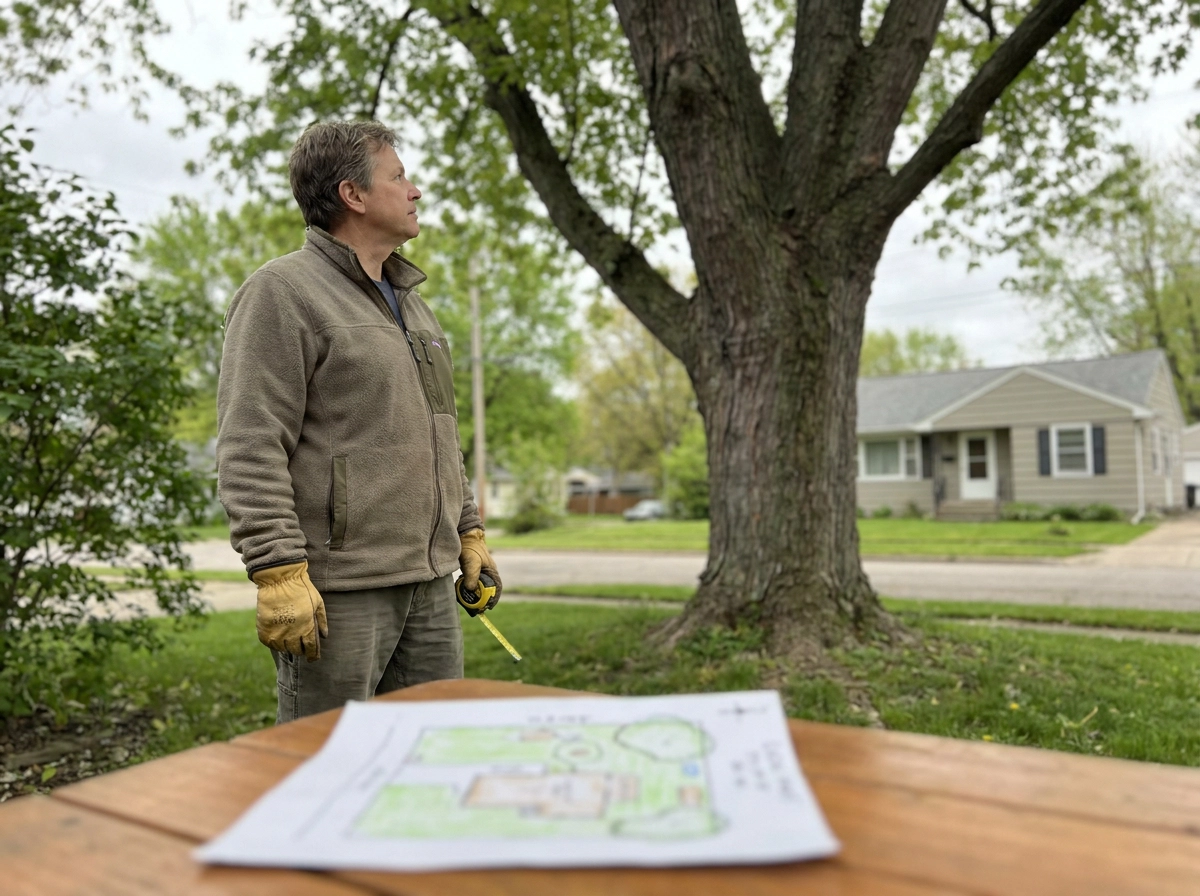
Walk your property with fresh eyes. Make a list of trees you have already been thinking about removing, whether for storm preparation, safety, a landscaping change, or an upcoming construction project. Getting that list out of your head and onto paper is a useful first step.
Schedule a professional assessment sooner rather than later. Contacting a local tree removal company familiar with Kitsap County conditions gets you documented evidence of each tree’s current condition under today’s regulatory environment. That documentation has real value if questions come up later. You can also browse recent posts for additional guidance on what professional tree care looks like in this region.
Act on problem trees now. If any tree on your property shows signs of structural compromise, disease, pest activity, or a hazardous lean, pursue removal through the current process. Waiting introduces compliance uncertainty you can avoid entirely.
Maintain the trees you plan to keep. Professional pruning and canopy maintenance reduces long-term risk and helps trees stay in good structural health, which matters if future rules reward retention of well-maintained specimens.
How a Local Tree Care Expert Helps You Navigate the Process
Knowing which steps to take is only half the equation. Having the right partner to carry them out is the other half.
A tree care company with deep roots in Kitsap County brings more than equipment to the job. Local experience means familiarity with the soil conditions, native species, and storm patterns specific to this region, and that knowledge shapes both how a tree is assessed and what that assessment says. That context matters when documentation needs to hold up in a regulatory conversation.
Lefler Tree Service has served Kitsap County since 1988.
For homeowners unsure whether a tree qualifies as a hazard, an on-site evaluation produces a written assessment that documents the tree’s condition clearly, covering structural defects, disease indicators, and risk factors in credible, organized detail.
Not every problem tree needs to come down. Services like structural pruning, canopy shaping, and storm preparation work can meaningfully extend the life of trees worth keeping, which reduces how many removals you may need to pursue under a tighter regulatory environment.
If you have been searching for tree removal companies near you, reaching out before the draft rules take effect keeps your choices open and your decisions grounded in facts rather than urgency.
The Bottom Line for Kitsap Homeowners
The draft rules aren’t final, but the regulatory direction is not ambiguous. Residential tree removal within Kitsap County’s urban growth areas is heading toward more oversight, not less. Waiting for the final ordinance before taking action means making decisions under stricter conditions, with fewer options.
Those three levers, UGA status, documented tree conditions, and timely removal, are the most practical options available today. Each one reduces uncertainty. Together, they give you a clear picture of your property and a defensible record if questions arise later.
Lefler Tree Service has been helping Kitsap County homeowners with exactly this kind of work since 1988. With more than 35 years of hands-on experience in the region, the team understands local tree species, site conditions, and what thorough documentation actually looks like. Whether you need a hazard assessment, a planned removal, or general canopy maintenance on trees worth keeping, getting started now puts you ahead of the changes rather than scrambling to catch up.
Conclusion
The regulatory direction is clear even if the final language is not. Doing nothing is itself a choice, and it is rarely the most advantageous one.
You do not have to navigate this alone. Lefler Tree Service brings more than 35 years of Kitsap County experience to every assessment, removal, and canopy project. The best time to act is before the rules are finalized. Contact Lefler Tree Service today and make sure your property is ready for whatever comes next.